
Short answer: No.
Last week at the grocery store, I saw two women laughing together—one wore a bright pink hijab, the other emerald green. They weren’t discussing religion; they were talking about recipes and colors they liked. That moment says it all.
Hijab color does not define your faith, sect, or level of religiosity.
What Islam Actually Says?
Islam emphasizes modesty, not color. There is nothing in the Quran or Hadith that requires or forbids specific hijab colors. Scholars from all major schools—Sunni and Shia—agree: as long as the hijab fulfills modesty, the color is a personal choice.
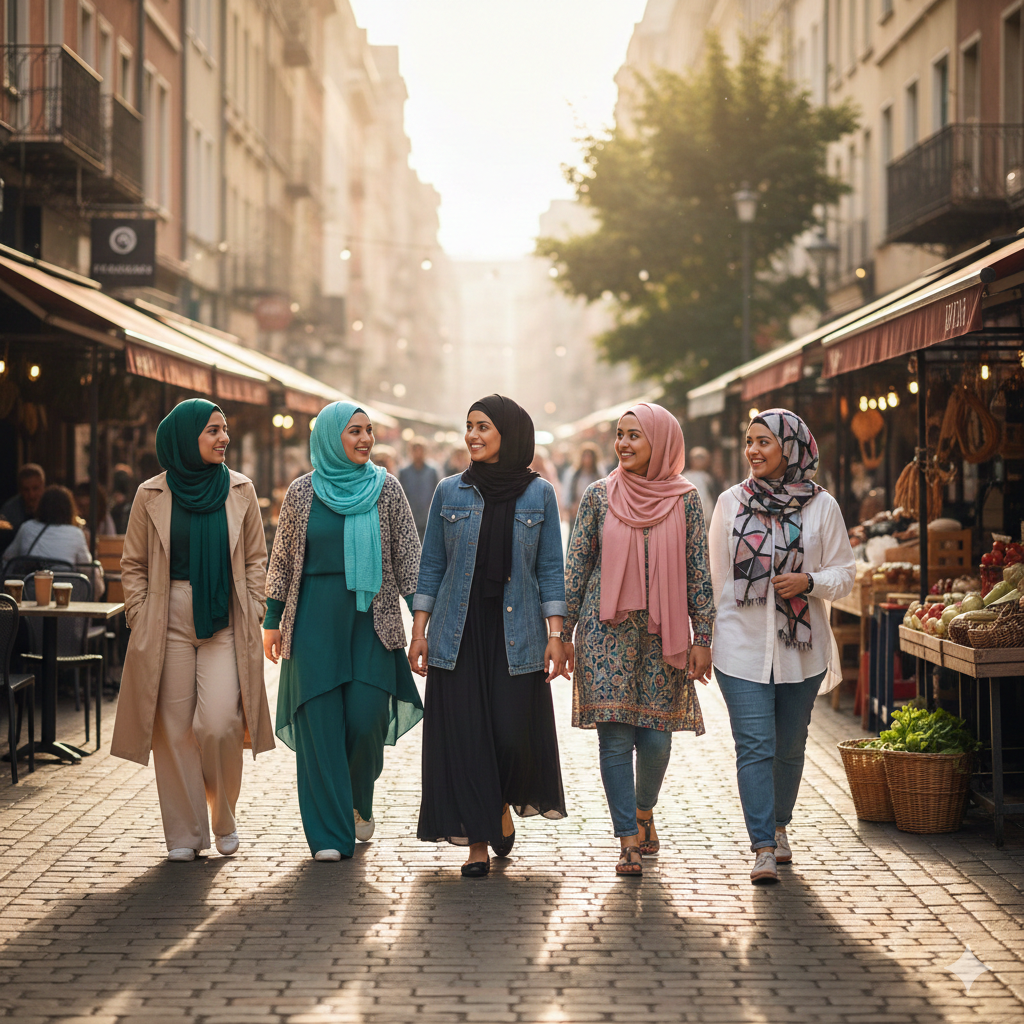
Black, white, bright pink, turquoise—none of these make someone more or less Muslim.
Why People Think Color Matters
The confusion comes mostly from culture, not religion.
- In some Gulf countries, black hijabs are common because they’re practical and traditional.
- In Southeast Asia, bright colors are popular and reflect local culture.
- In North Africa, patterned scarves are common and celebrate regional art.
These differences are shaped by history, climate, and customs—not theology.
Across Islamic schools of thought, the conclusion is the same:
- Modesty comes first
- Color is secondary
- No color signals a specific sect or spiritual “rank”
There is no Islamic color system that labels Muslims.
Do Colors Have Meaning?
Sometimes—culturally or personally.
- Green is associated with paradise and is popular during religious celebrations.
- White often represents purity and is worn during special occasions.
- Bright colors are common at festivals and joyful events.
- Black is linked to modesty and simplicity in some cultures.
But none of these meanings make someone more religious—or less.
What It’s Really About
Hijab color reflects personal choice. Mood, personality, culture, work, style—all play a role. A woman might wear bold colors on weekends and neutral ones at work. That’s not changing faith; that’s adapting to life.
Some women choose colors with spiritual meaning. Others choose what matches their outfit. All of it is valid.
You cannot tell someone’s beliefs, sect, or devotion by hijab color. Muslims are diverse, and a piece of fabric can’t explain 1,400 years of global history.
If you’re curious about someone’s beliefs—ask them. Don’t assume.
Your hijab color is your choice. It may reflect your culture, personality, or mood—but it does not define your faith.
Wear what makes you feel confident and comfortable. Islam does not rank believers by fabric shades.
And if anyone tells you your hijab color makes you “less Muslim,” remember:
There is no hijab color code in Islam—only modesty and intention.